Ancient schoolrooms at Butser Ancient Farm
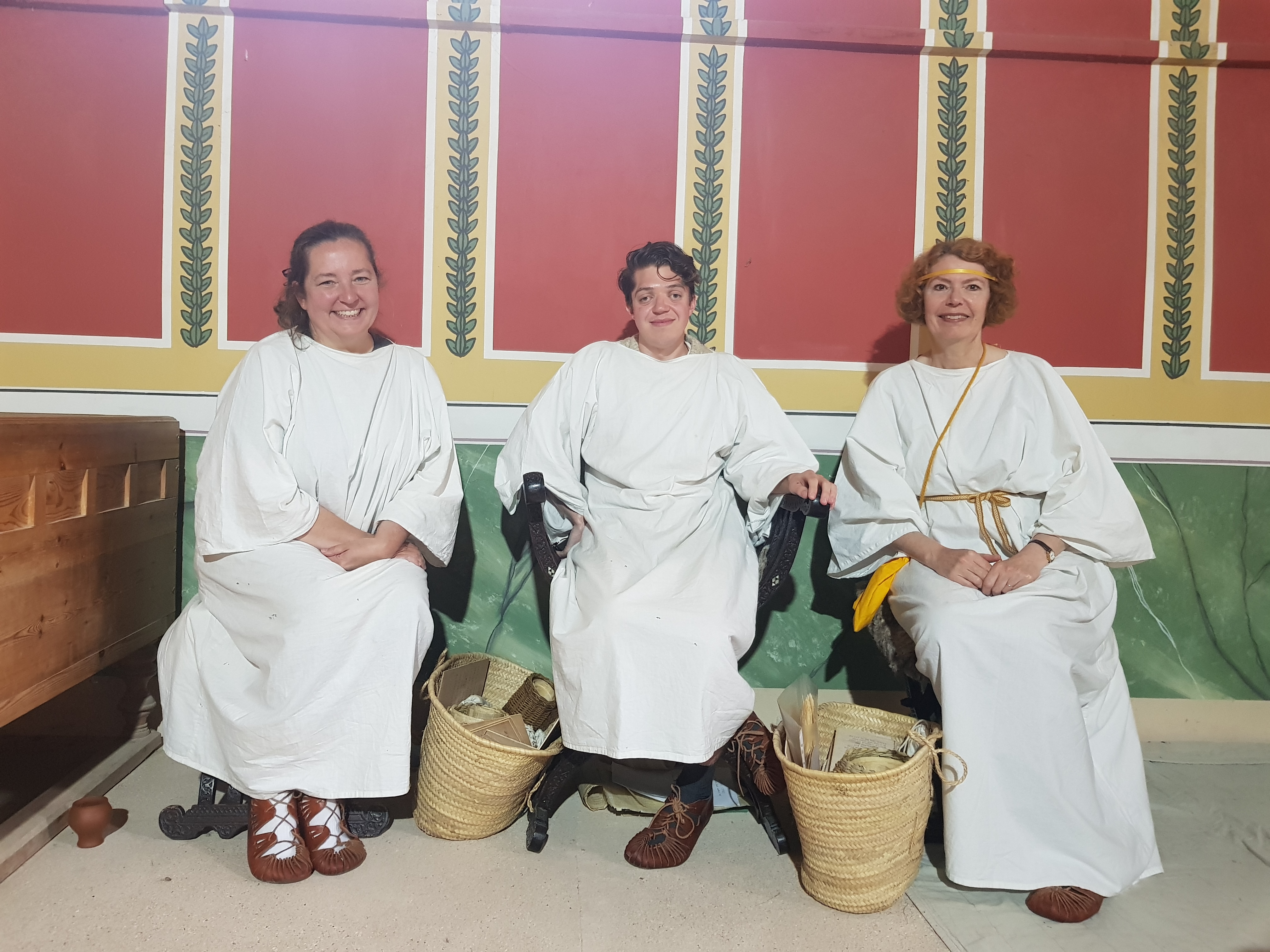
Every August for the past three years, the Reading Ancient Schoolroom has spent a week at Butser Ancient Farm in Hampshire.

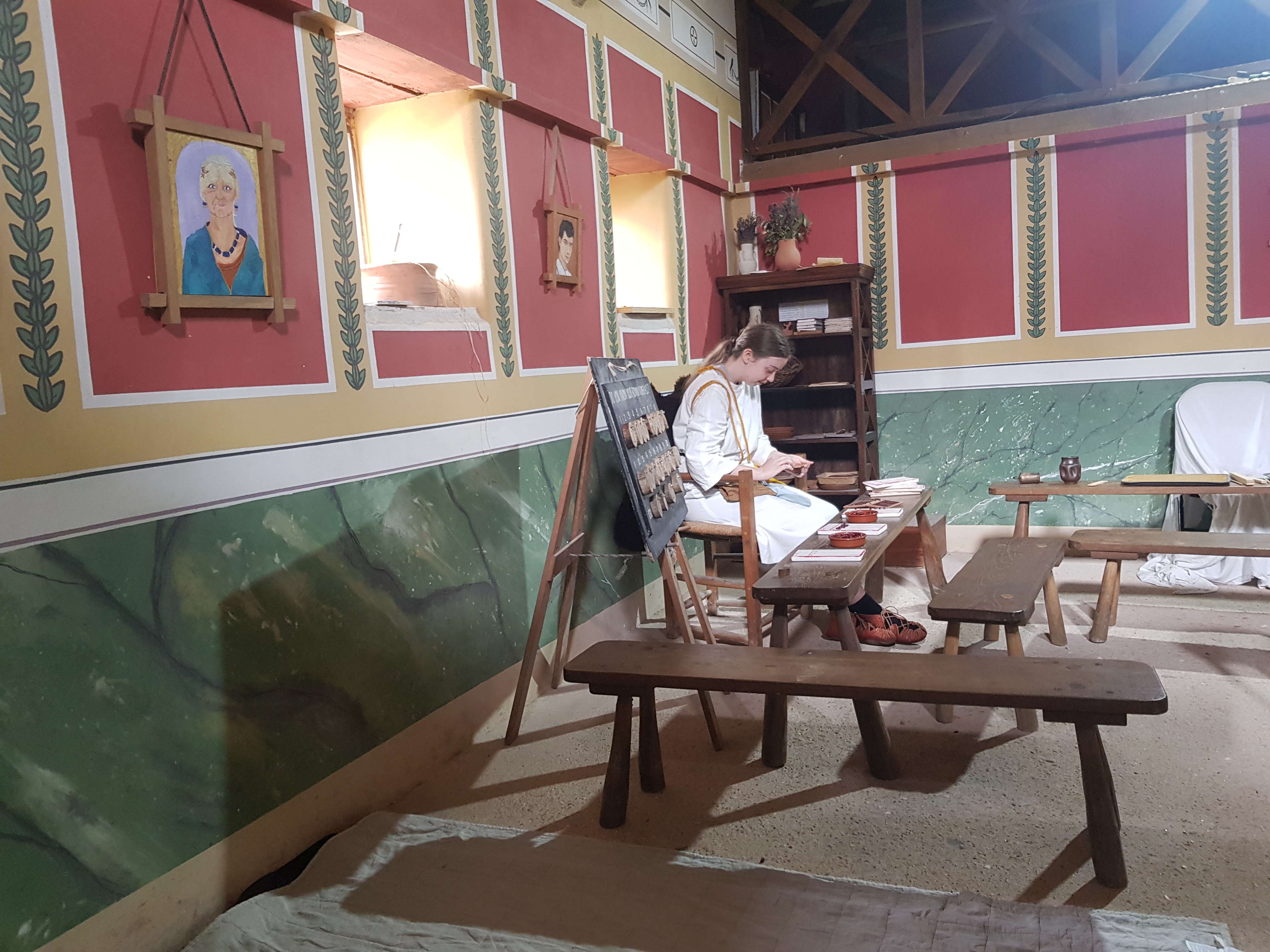
Butser has a reconstructed Roman villa, where we hold a Roman school on a drop-in basis for visitors to the farm.


Here we cater not only to school-age children but also to adults and to pre-school-age children. Activities on offer in the schoolroom typically include reading (Homer on papyrus, Virgil on wooden tablets, fables of Phaedrus on wooden tablets), writing (copying, dictation, free composition, or for very small visitors drawing) on wax tablets or with pen and ink on cardboard, Latin (a wide range of exercises at all levels from beginner to advanced), ancient Greek (beginner or advanced), memorisation, ethopoeia (an ancient school exercise where you retell a story you’ve read from the perspective of a character in it), arithmetic (learning to count with Roman numerals, addition, subtraction, multiplication, division, compound interest, fractions, etc.), geometry (done on a sand table with a stylus, straightedge, and compass; our very small visitors prefer to use this for making sandcastles, which is fine as long as no-one is wanting actual geometry at that moment), making Roman ink (this one tends to be messy), making reed pens (with parental permission, as this involves a sharp knife), and learning how to give change with Roman coins of the first century AD.
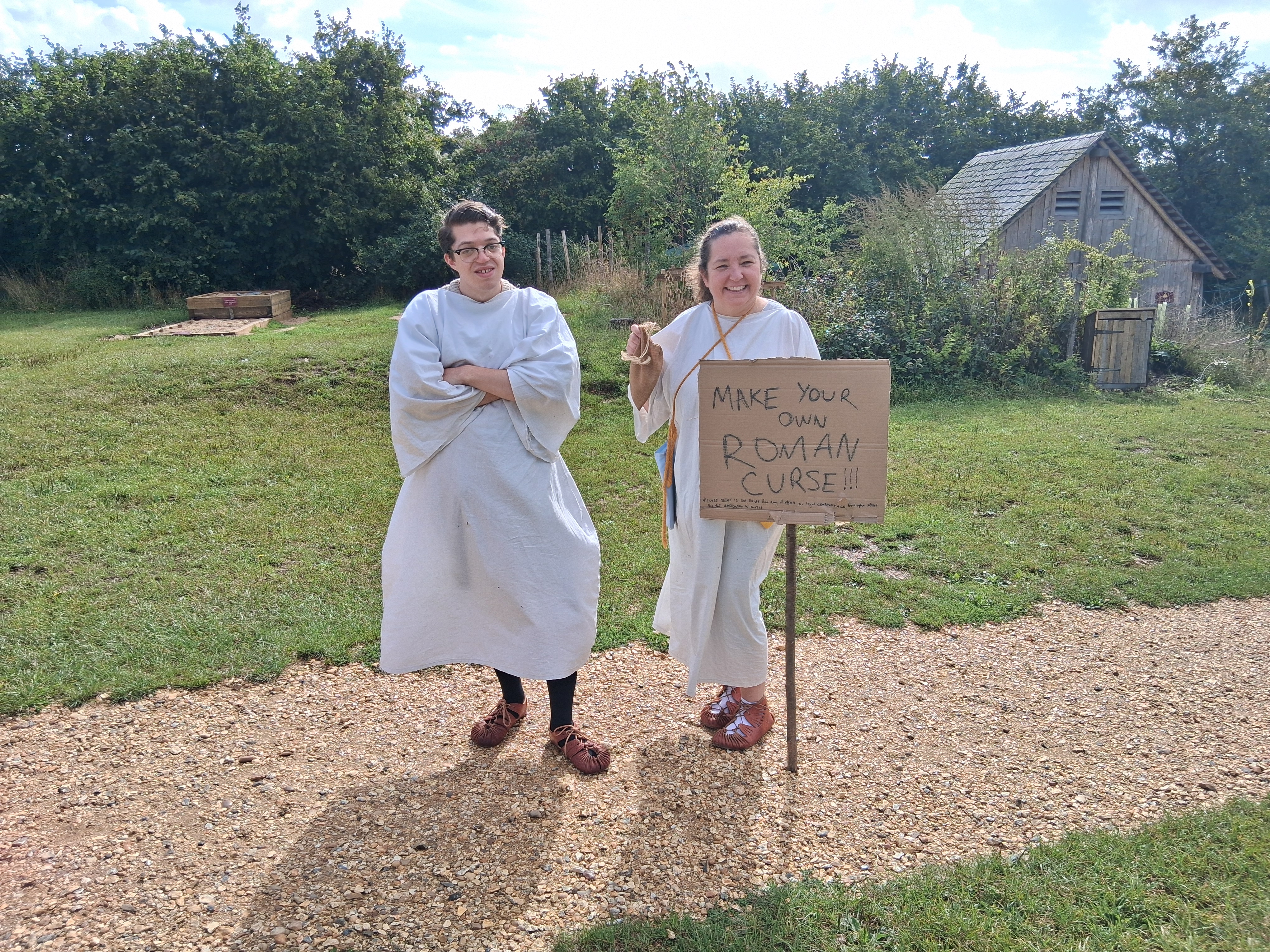
When our team is big enough to staff additional activities outside the schoolroom itself, we also offer magical gems (carve your own charm against tummyache while learning about Chnoubis, the god of tummyache), curses (discover what is in the Bath and Uley curse tablets and make your own Roman-style defixio), graffiti (find out what the Romans wrote on their walls and how they did it without spraypaint, and write some Roman-style graffiti, though not on the walls of Butser’s beautiful villa), and sometimes spinning and sewing (make your own Roman purse).
At Butser we also offer full-day and half-day workshops (mostly for children, but sometimes for adults) on specialised topics, such as:
– Greek tragedy: full-day drama workshop concluding with a performance of (a shortened version of) Aeschylus’ Agamemnon
– Roman comedy: full-day drama workshop concluding with a performance of (a shortened version of) Plautus’ Miles Gloriosus
– Roman magic: half-day workshop exploring gems and curses in more depth
– Roman graffiti: half-day workshop exploring the Pompeiian remains in more depth
– Roman arithmetic: half-day workshop developing understanding of the way ancient calculation works and confidence in its execution
– Vindolanda tablets: four-hour workshop exploring these uniquely valuable remains from Roman Britain, at the end of which participants make their own historically accurate wooden Vindolanda tablet and write a Vindolanda-style letter of their own composition on it, in Old Roman Cursive script, with pens and ink they have made themselves.
– Latin: full-day workshop re-creating a Latin class from first-century Britain, for people with or without prior knowledge of Latin

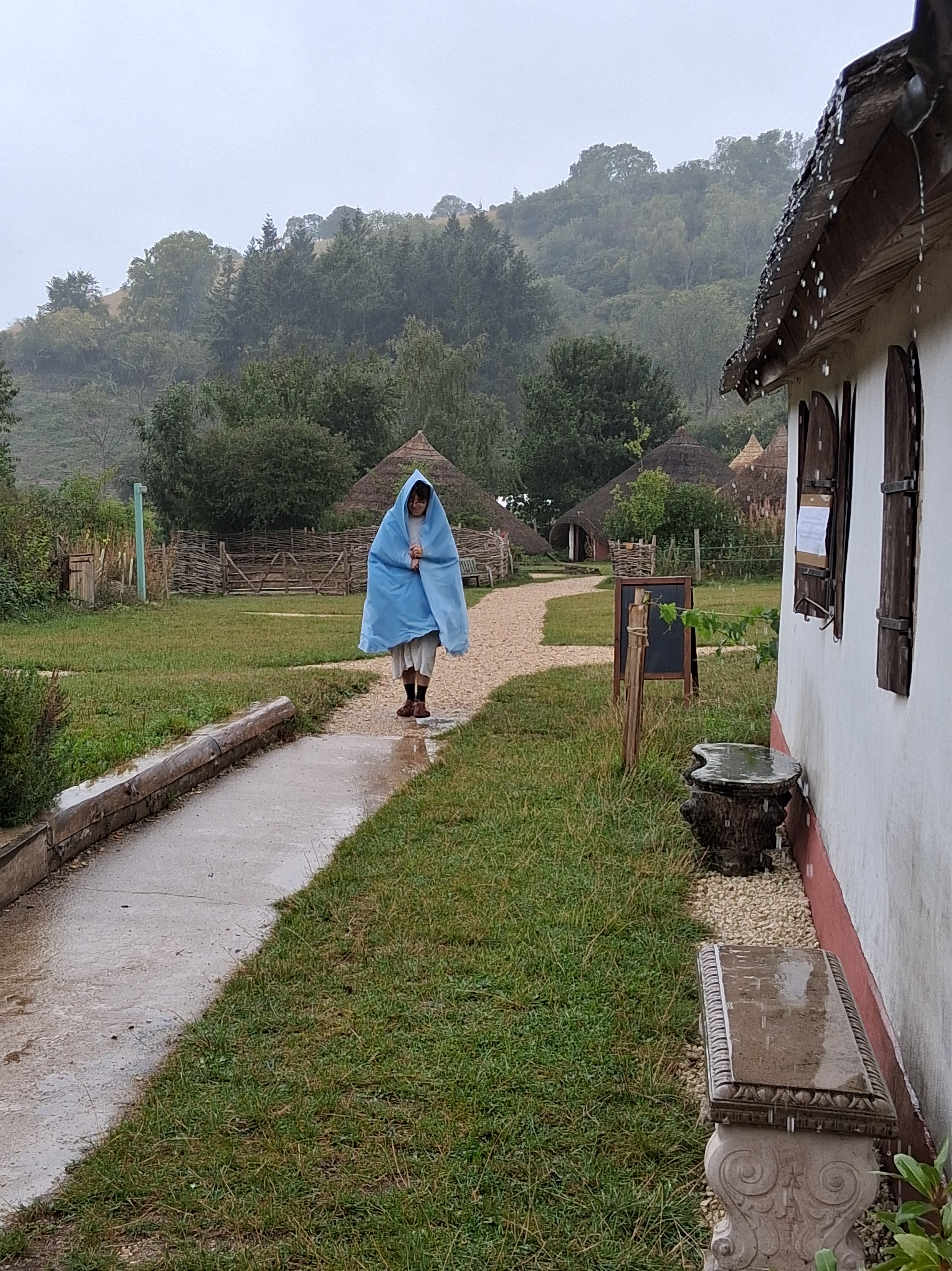
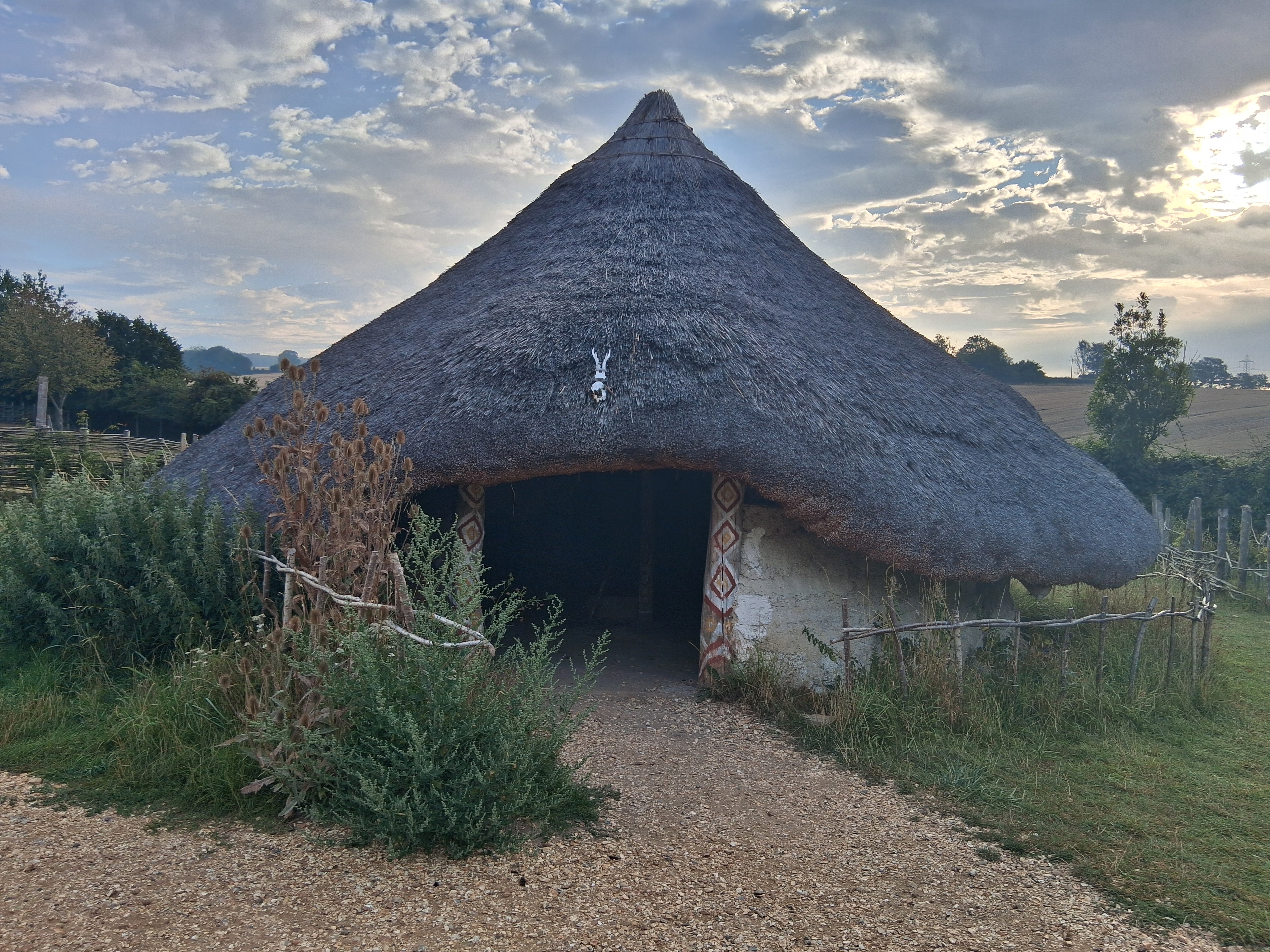
While at Butser we sleep in the Roman villa and other reconstructed buildings (Neolithic, Bronze Age, Iron Age, and Anglo-Saxon), wear Roman raingear when it rains, cook our own Roman food over open fires, and bathe in the afternoon at a local leisure centre. Not everyone would consider this to be fun, but we do!

Many thanks to our amazing teams of Butser volunteers, who have included professors, lecturers and students from Oxford, London, and Milan; a schoolteacher from Boston; and of course numerous colleagues and students from Reading.

 Reading Ancient Schoolroom