Costumes can be a lot of work. The easiest solution is to ask the pupils to come dressed as Romans and leave the details to them. This can produce good results but does have pitfalls: poorer pupils and those with less engaged parents may be painfully disadvantaged, some may choose not to co-operate, and you may end up with severe historical inaccuracies. (We once got a medieval knight in full armour. It was a really good set of armour, so I can see why he wanted to use it, but in addition to being from the wrong period it was not at all practical for a day in school.) You may also end up with a lot of swords and spears, and children who have weapons may feel it would be a pity if they didn’t get to use them. So there is something to be said for trying to provide your own costumes, despite the challenges that poses.
Most people think of the typical Roman garment as being a toga, and togas are easy to make. But they are not ideal for ancient school wear, both because they were exclusively the garment of high-status males (most schoolchildren would not have been entitled to wear them) and because they fall off unless you have a lot of experience in wearing them. You can pin them on, but that takes a long time (especially if one teacher is trying to pin many children) and is not entirely successful.
A better garment is a tunic, that is basically a T-shaped garment. Roman tunics were often thigh-length with short sleeves, but such garments look ridiculous if worn on top of modern clothing. And you do want participants to be able to slip their costumes on on top of their regular clothes, since asking them to take off their clothes has many disadvantages. So we recommend ankle-length, long-sleeved tunics. Unfortunately those can’t easily be purchased; one needs to make them, of course in a variety of different sizes. We recommend using different colour fabric for the different sizes, to make life easier during costuming and decostuming. You can get 100% cotton fabric reasonably cheaply here: https://fabricland.co.uk/product/plain-cream-100-cotton-fabric/.
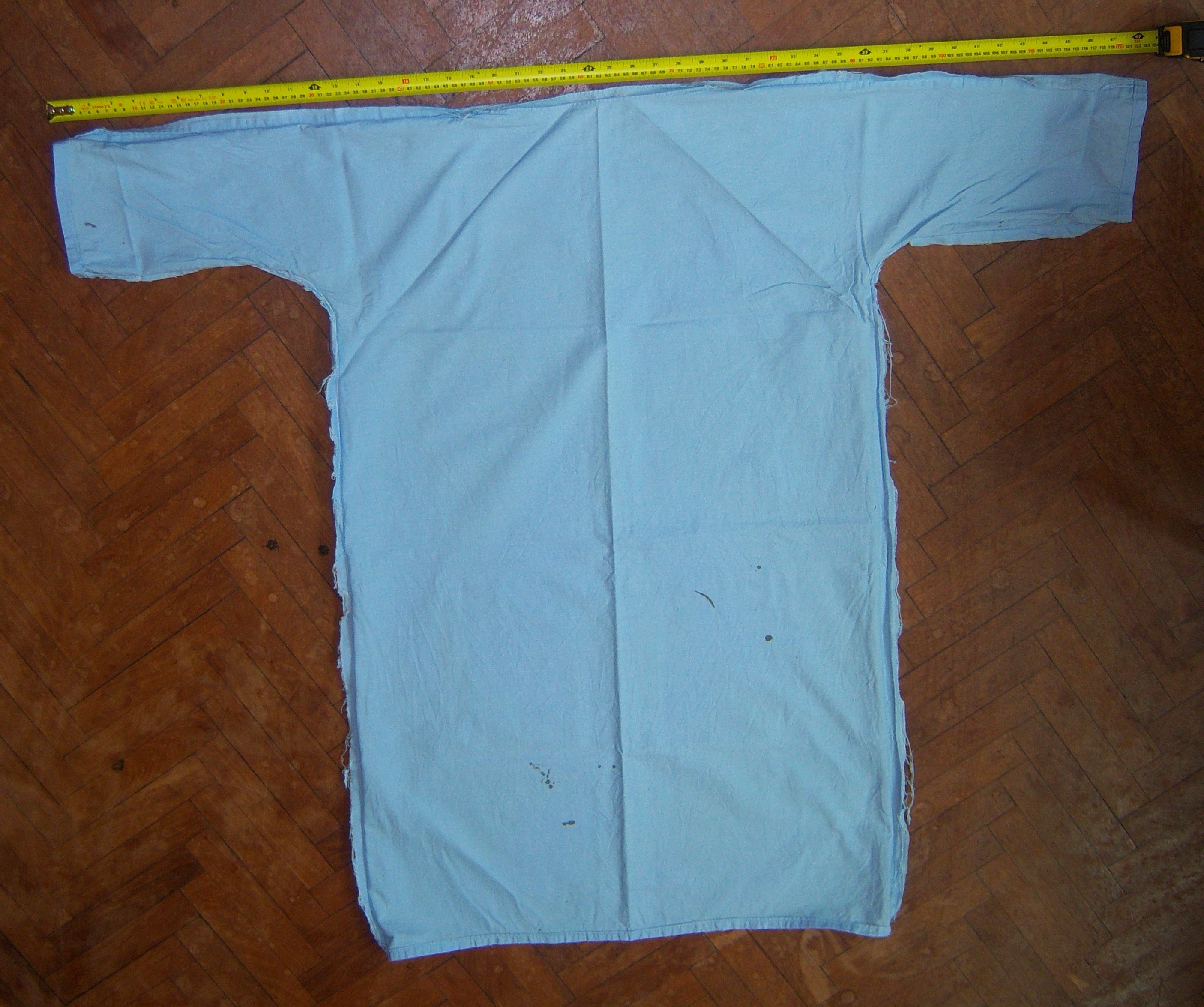
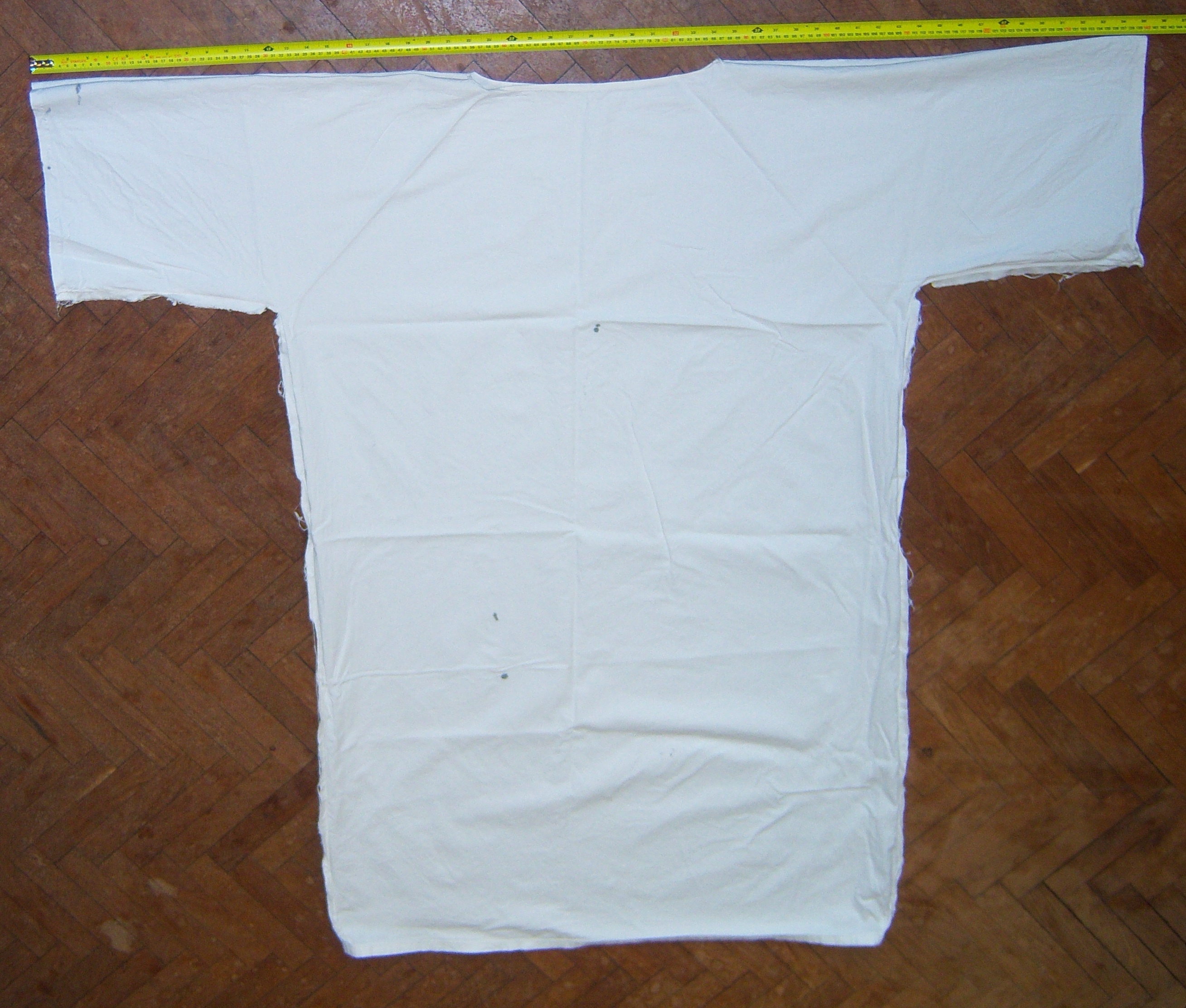
Be sure to make the tunics wide enough to get on and off easily; they need to be considerably baggier than modern clothing, because (unless you use inauthentically modern fabric: any knit fabric is inauthentic, as the ancients used straightforwardly woven fabric) they do not stretch. Neither the sleeves nor the body should be flared; Roman tunics normally had straight sides. We can’t share our tunic patterns, because we haven’t got any: we use our old tunics as patterns for any new ones we make. But here are pictures of some of our more successful designs. Pictures here: tunic medium, tunic extra small, tunic large, tunic extra large short


Belts (easily made from ribbon or thick yarn) make the tunics both feel better and look better, though they are not very authentic.
Roman shoes can be purchased (ours come from https://www.der-roemer-shop.de/Carbatinae-roemische-Schuhe) but are expensive. Our experience suggests that the overall effect can still work if you simply skip the Roman shoes and have pupils come in their normal shoes, but it definitely works better with Roman shoes. If you do invest in Roman shoes, we strongly recommend requiring pupils to wear socks with them, both for hygiene reasons and because the shoes often have sharp places on the inside that can be very uncomfortable. Anyone who will be standing a lot (the school slave, if you have one) may want to put modern insoles into the Roman shoes; those will be invisible and do a lot for the comfort levels.
 Reading Ancient Schoolroom