The crucial element here is to make a clearly demarcated ancient space from which signs of modernity can be removed. If you are using a normal classroom, this typically means getting the furniture out of the room and covering up its walls (e.g. with sheets). Piling the furniture in a corner and covering it up will also work. This setup takes time, both to do and to reverse, but it is really worth doing. If pupils sit at desks or tables, they will continue to act like modern schoolchildren no matter how they are dressed. Also, they will naturally use the desks to write on and will therefore miss the point of how the ancient materials should be used. Until the late empire, ancient pupils never had desks; when writing on papyrus they put it on their right thigh (or, for Egyptian speakers, on their lap with their tunic stretched tightly across their legs), and when writing on tablets or ostraca they held these in their left hands. (That is why ancient tablets are so small: larger ones would have been too hard to hold in one hand.)
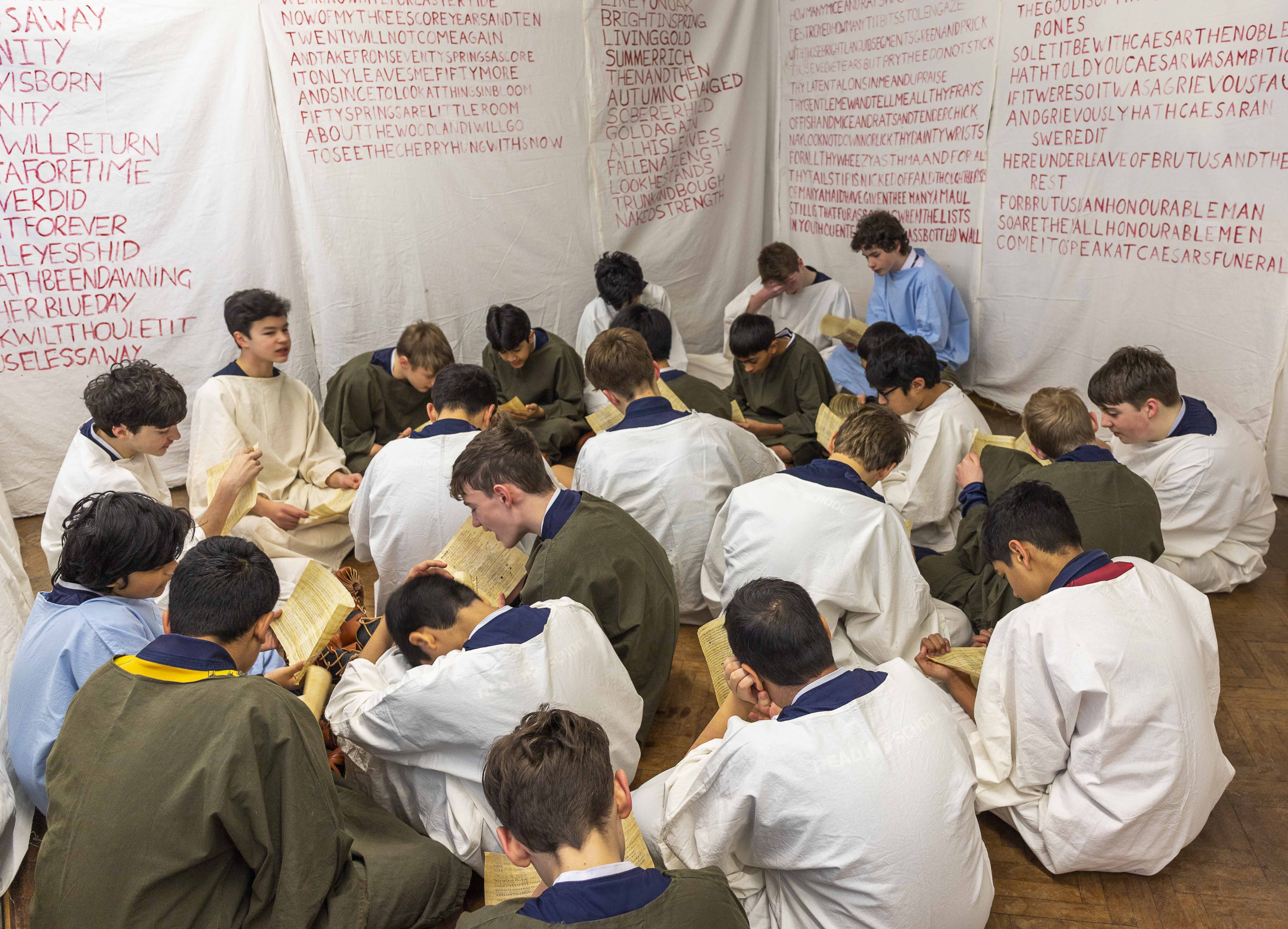
Across the entrance to the ancient space you need a curtain or other obvious demarcation: on one side you’ve got the modern world and on the other the ancient one. (The classroom door is not ideal for this purpose, both because it usually looks modern and because ancient evidence suggests that schools used a curtain rather than a door.) Pupils should not be able to see the interior of the ancient space until they enter it ready to be ancient pupils: the shock of that first sight is part of what startles them into acting their parts.

Inside your ancient space the minimum furniture you need is chairs for the teachers and containers for the writing materials when not in use. If you have ancient-looking chairs that’s great; if not you can use any chair covered with a sheet. For the materials we use large baskets, but one could use cardboard boxes disguised with sheets.

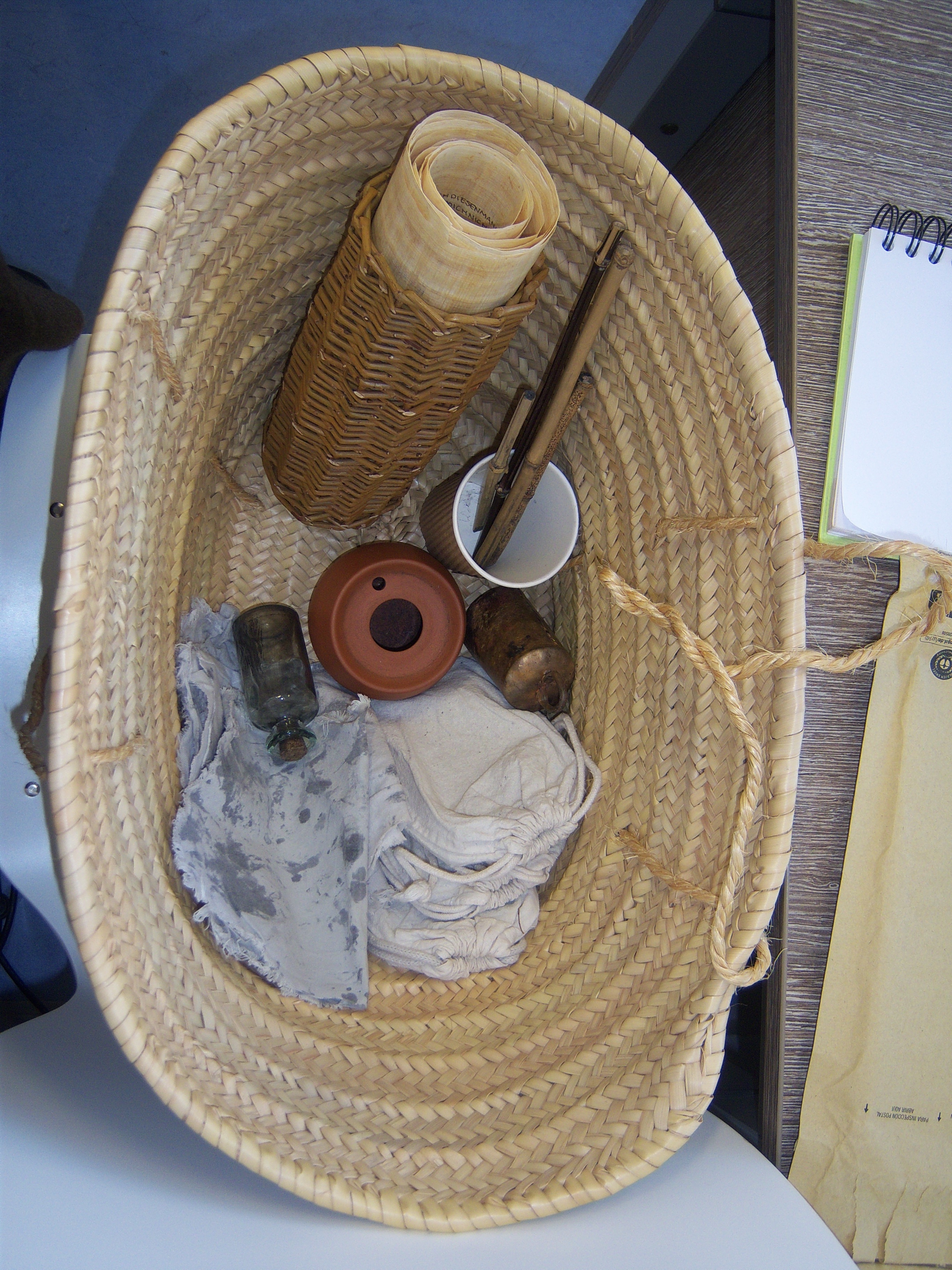
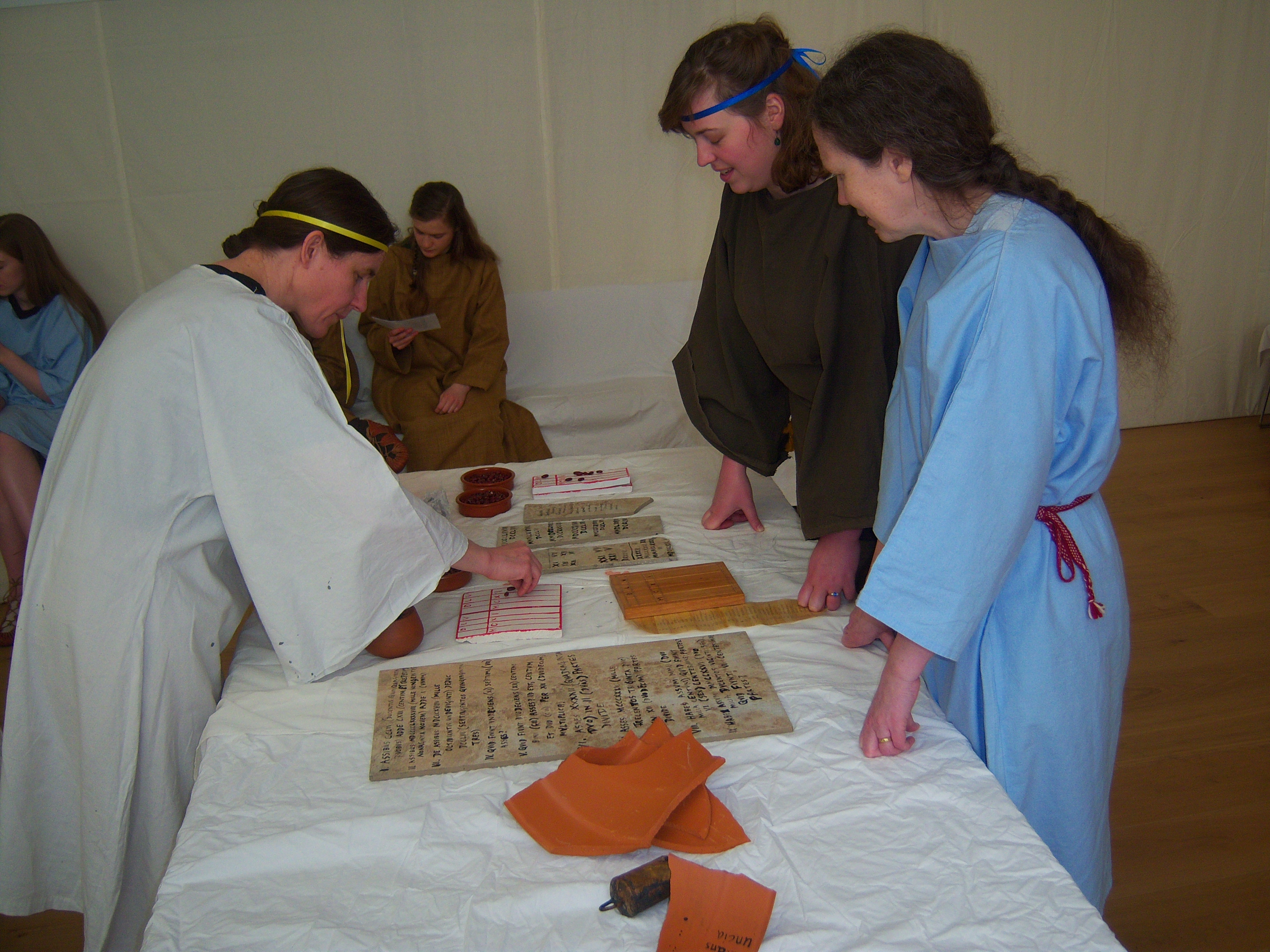
Other furniture that can be useful:
- Tables for arithmetic. In antiquity arithmetic would have been done standing around a table, but for smaller children this means that the table is either too high for the children or uncomfortably low for the teacher. We therefore often use low tables (about coffee-table height; an empty cardboard box covered with a sheet works well) and sit on the floor.

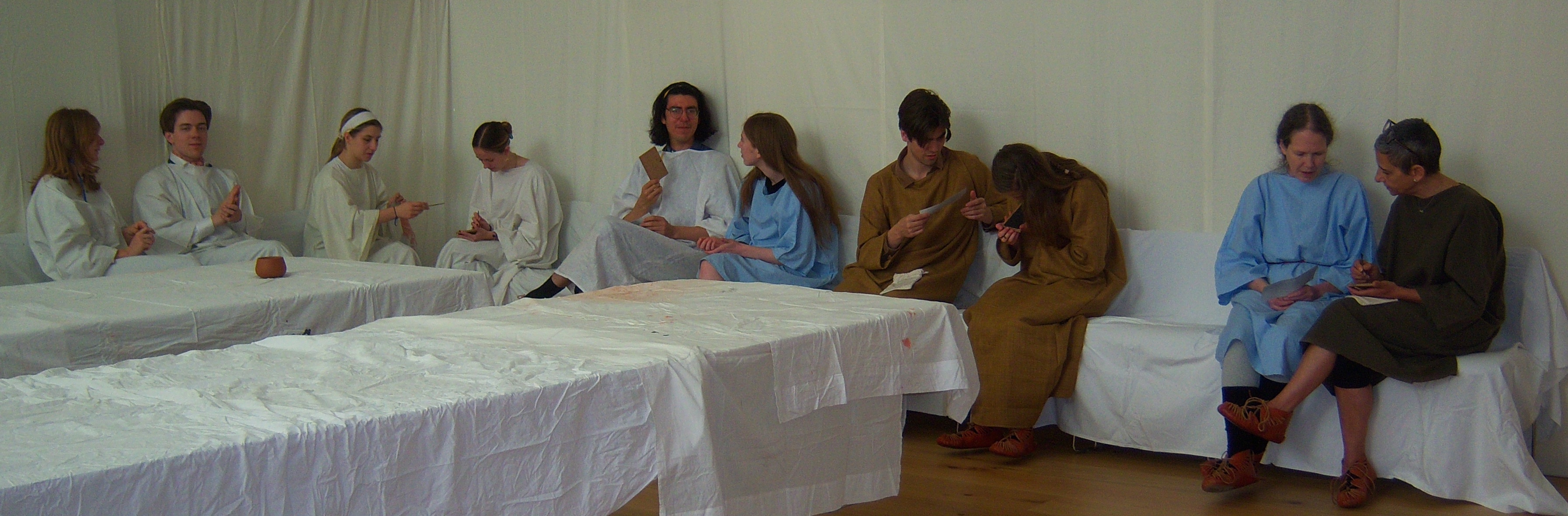
- Benches for the pupils to sit on while working. Smaller children are happy to sit on the floor, which is authentic, but benches are also authentic and are more comfortable for the older ones. Ancient benches ran around the walls (three sides of the room, with the teachers on the fourth side), but additional rows in the middle are okay provided there is a large open space in front of the teachers, where pupils can stand when reciting or queueing to recite. If you have flat-seated, armless chairs, you can make a bench by lining them up and draping sheets over them. Occasionally Roman pupils sat in individual chairs, but never ones with arms, let alone with desks on the arms.
- An ink-proof floor covering if you are using ink: accidents do happen. We use a thick, washable quilt; we put this near the texts on the walls and ask pupils to keep all ink there.

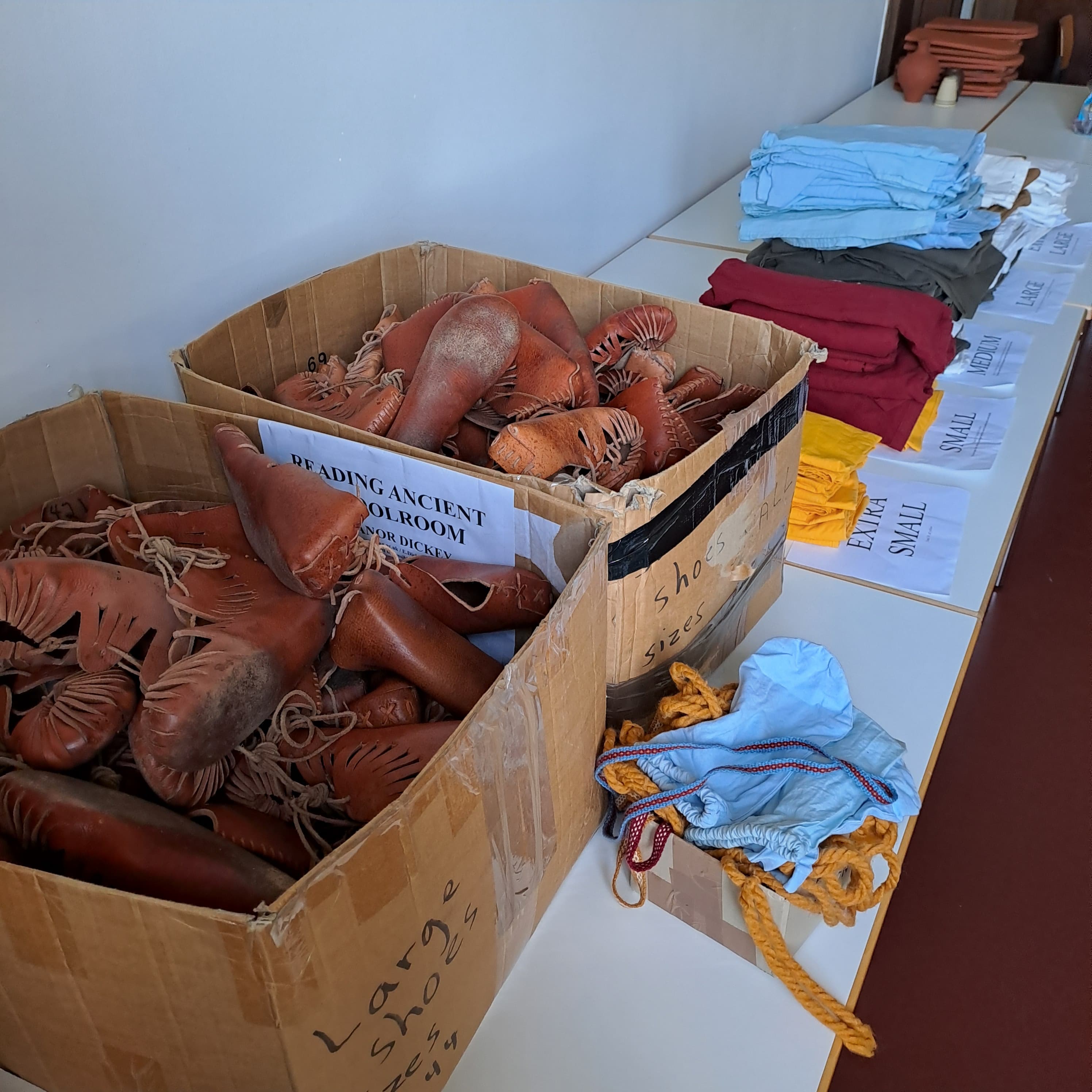
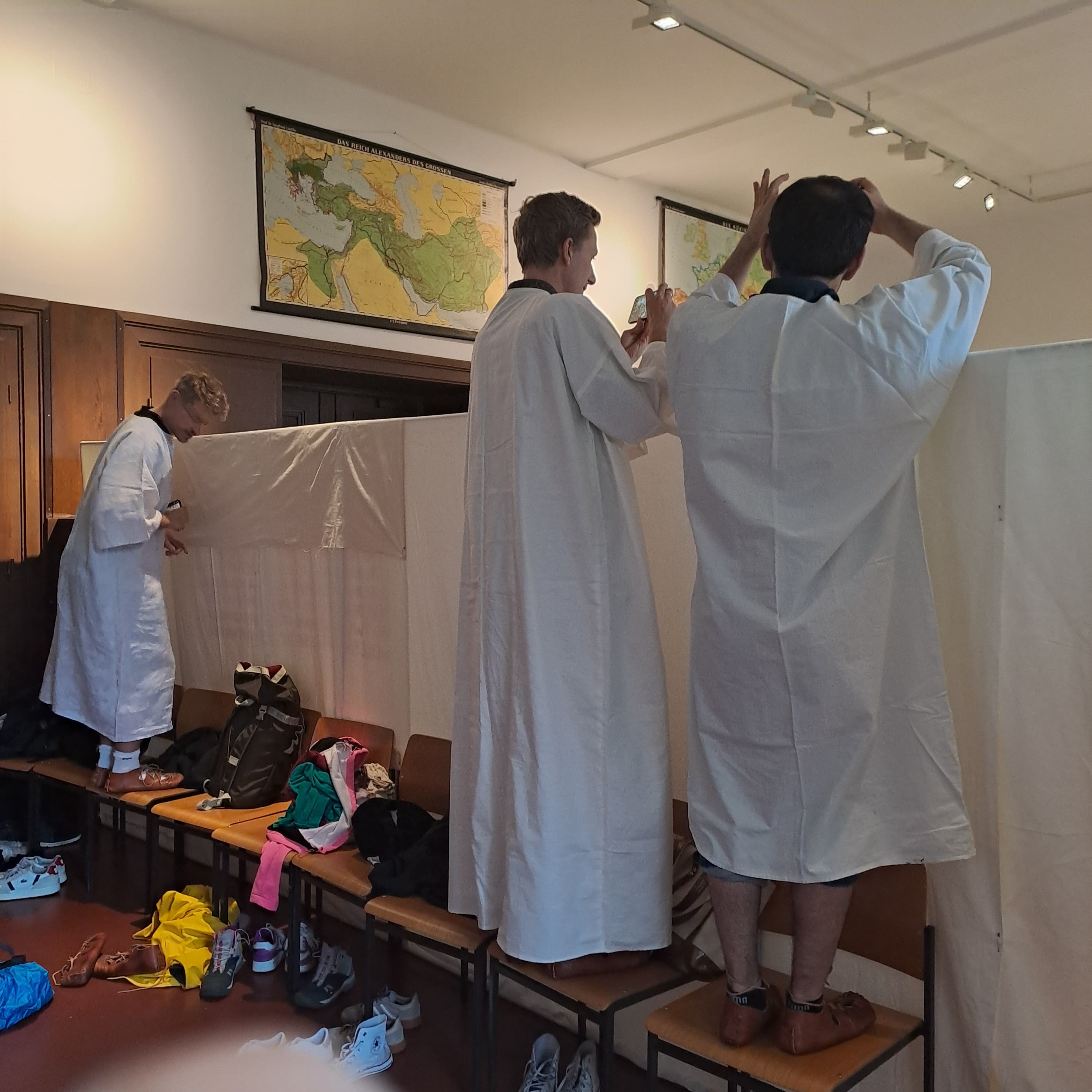
Outside your ancient space you need a changing area where pupils can put on their costumes and leave their bags etc. We find that this should be a fairly big space (the same size as the ancient space is ideal), with tables on which the costumes can be laid out to separate different sizes (and under which the pupils’ bags can be stowed) and a row of chairs where pupils can sit to change their shoes. This space should ideally be separated from the rest of the school by a closed door, to keep both the pupils’ possessions and your spare costumes safe – but using a corridor can work if that’s the only option.
 Reading Ancient Schoolroom